Paperclip: Managing AI Agents Like a Team
I read through paperclipai/paperclip because the idea sounded ambitious: an app for managing AI agents at work.
My short version:
Paperclip is not another chatbot.
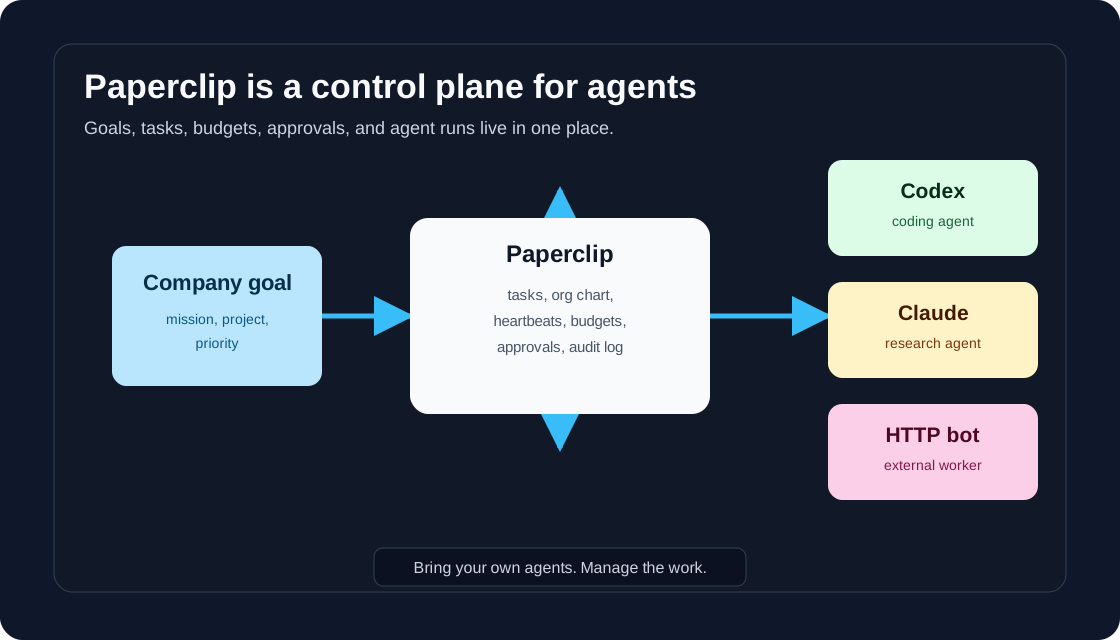
Paperclip is a control plane for teams of agents.
That distinction matters.
What Paperclip is
Paperclip is an open-source Node.js server and React UI for orchestrating AI agents. The README describes it as a place to bring your own agents, assign goals, track work, control budgets, and audit what happened.
It works more like a task manager plus org chart for agents:
- company goals
- agent roles
- task tickets
- heartbeats and scheduled work
- cost tracking
- approvals and governance
- audit logs
- multiple companies in one deployment
The line I found useful is this:
If an AI coding agent is an employee,
Paperclip is closer to the company around it.
That is the mental model.
What Paperclip is not
The README is also clear about what it is not:
- not a chatbot
- not an agent framework
- not a prompt manager
- not a single-agent tool
- not a code review tool
That helps me decide when I should care.
If I only use one coding assistant to make small changes, Paperclip is probably too much.
If I have many agents running different jobs and I keep losing track of cost, state, tasks, or ownership, Paperclip starts to make sense.
The fastest way to try it
The repo quickstart is:
npx paperclipai onboard --yes
That starts the local quickstart path. The README says this defaults to trusted local loopback mode for the fastest first run.
If I wanted a private network setup, the README also shows:
npx paperclipai onboard --yes --bind lan
npx paperclipai onboard --yes --bind tailnet
I would start locally first. No grand architecture. Just one small workflow.
A practical first workflow
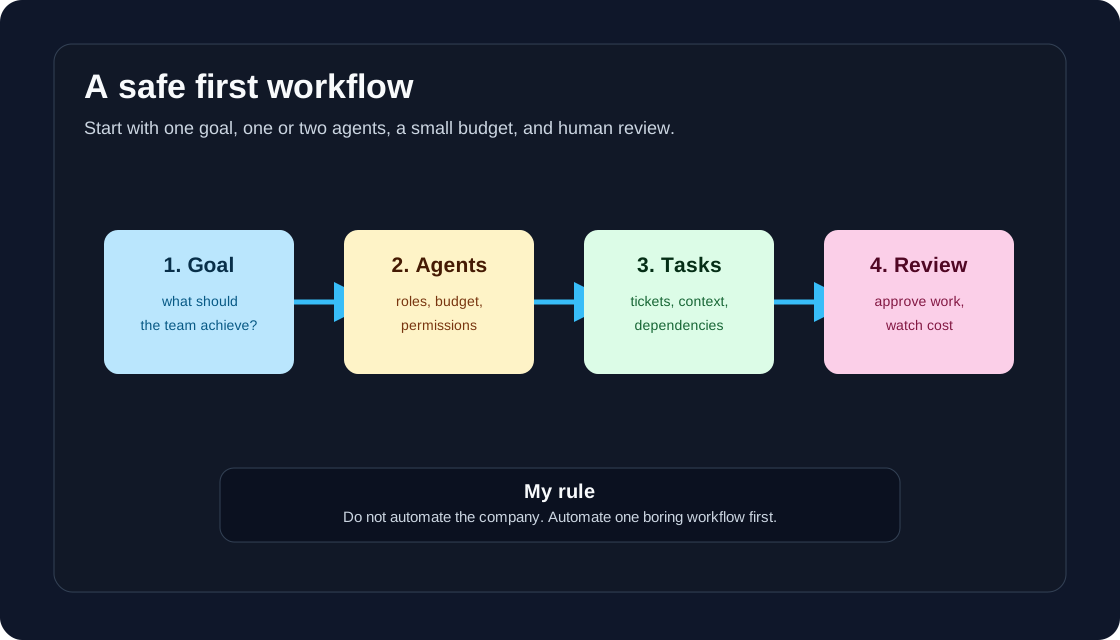
My first experiment would not be “run an autonomous company.”
That is too big.
I would try Paperclip as a website keeper.
Goal:
Keep my personal blog active and healthy.
Agents:
Researcher: finds possible post topics.
Writer: drafts a simple post.
Engineer: checks the site build.
Reviewer: looks for unclear claims and missing sources.
Tasks:
Find one engineering topic this week.
Draft one short post.
Create original diagrams.
Run Jekyll build.
Report what changed and what still needs review.
Budget:
Small weekly budget.
Hard stop if the budget is reached.
Human approval before publishing.
That is boring. Good. Boring workflows are where tools prove themselves.
Where I think Paperclip helps
Paperclip seems most useful when the pain is coordination:
- too many agent sessions
- too many disconnected prompts
- repeated jobs
- unclear task ownership
- runaway token spend
- no audit trail
- no central place to pause, approve, or inspect work
This is different from “how do I make one model smarter?”
Paperclip is more like:
How do I run many agents without losing control?
Simple examples
I can imagine using it for:
Support triage
One agent summarizes tickets. Another groups duplicates. A human approves replies.
Engineering maintenance
One agent checks dependency updates. Another opens small PRs. A reviewer agent checks risk before a human merges.
Content operations
One agent researches topics. Another drafts. Another checks sources. A human publishes.
Weekly reporting
One agent gathers metrics. Another writes a short report. A human reviews before it goes out.
In every case, I would keep a human approval step.
My safety rules
If I used Paperclip, I would start with these rules:
One workflow first.
One or two agents first.
Small budgets.
No production writes at the beginning.
No secrets unless absolutely needed.
Human approval before external action.
Review cost and audit logs every week.
The point is not to make agents autonomous as fast as possible.
The point is to make autonomy observable.
My conclusion
Paperclip is interesting because it treats agents less like chat windows and more like workers in an organization.
That feels like the right direction if teams really start using many agents at once.
But I would not start big.
I would start with one boring recurring workflow, one tiny budget, and a human review gate. If Paperclip makes that workflow easier to track, cheaper to run, and safer to audit, then I would expand.
That is the practical test.